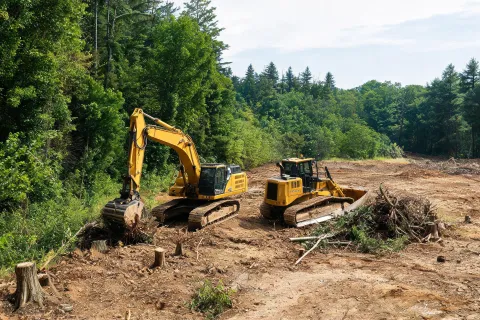
Clear & Grub
Medium excavator with mulcher or grapple clears root mats before mass cut starts.
Hyundai ships, services and rebuilds the excavator classes needed for highway, quarry-belt and runway earthworks — so procurement is not stitching four OEMs together at every change order. Project sales teams map operating weight, digging depth, bucket capacity and ground pressure against each process node before the first float truck arrives.
Whether the package is mass excavation in red clay, wheeled excavator trenching on urban shoulders, or mining-class loading into rigid haulers, the same IoT feed and Tier 4 Final documentation pack travels with the fleet — giving the engineer of record one audit trail from clear-and-grub through handover density tests.
Medium excavator with mulcher or grapple clears root mats before mass cut starts.
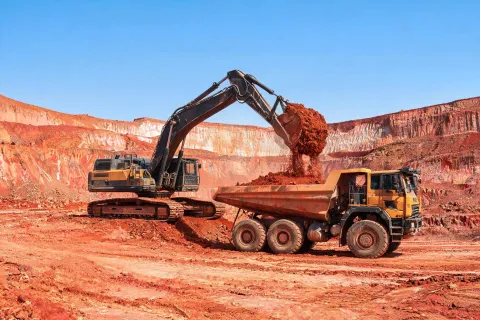
45–90 t crawlers pair with 30–40 t articulated haulers on bank cubic meter targets.
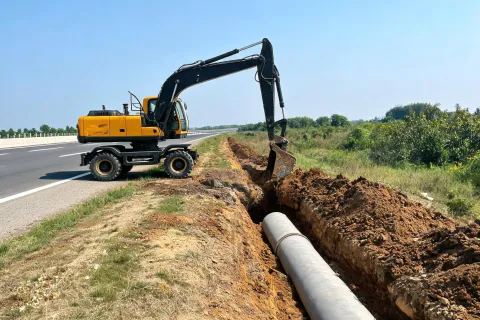
Wheeled excavators and compact units trench shoulders without waiting on float trucks.
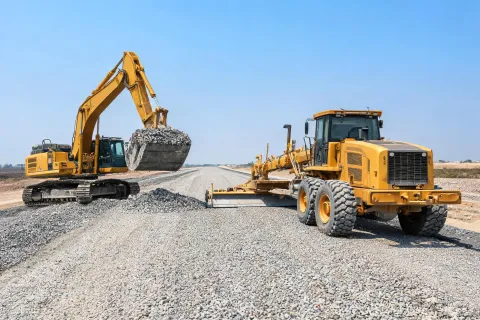
Excavators feed aggregate and cut ditches while graders and drums hold crossfall.
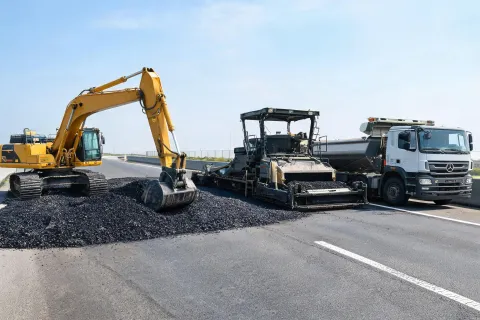
Material handling excavators stage millings and shoulder backfill beside the paving train.
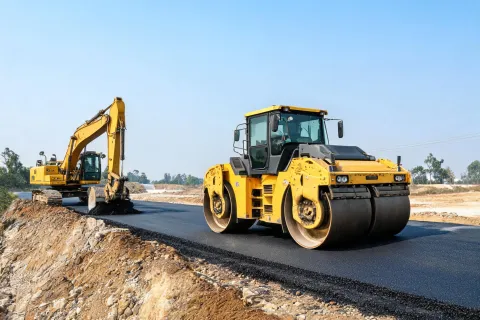
Precise edge trimming keeps rollers productive without scarring finished mat edges.
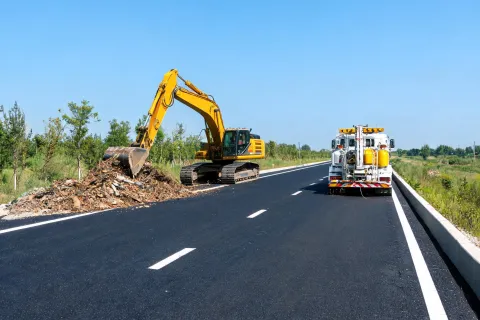
Final debris and temporary access pads cleared before paint and thermoplastic crews roll.

As-built survey and density checks close the earthworks package against the digital twin.
The same package can justify different excavator undercarriages at different process nodes. Procurement should not force one chassis type across the full corridor schedule.
Operating weight 45–90 t, digging depth past 7 m and breakout force above 150 kN favor steel undercarriage and low ground pressure. Wheeled excavators lose traction and tip margin on soft spoil piles, so Hyundai project sales quote crawlers for the cut/fill window even when drainage later uses wheels.
Shoulder trenches under live traffic need frequent 2–5 km moves. Wheeled excavators skip float trucks and cut pavement scarring; crawlers still win when the trench sits in soft clay with high ground-pressure risk or when hydraulic breaker duty dominates the shift.
Single purchase order · single excavator service contract · single Tier 4 Final audit pack — instead of reconciling four OEM portals every time the schedule slips.